A Mount Holly home office that shares a circuit with a bedroom and a bathroom eventually announces the problem: the breaker trips when the space heater, printer, and hair dryer overlap, or the lights dip when the workshop saw starts. Extension cords and power strips multiply to cope. The real fix is a dedicated circuit, sized for the room's actual loads and run to the places the equipment actually sits. It sounds like a large project. Broken into its parts, it is a well understood one.
A dedicated circuit serves one purpose or space and nothing else, so its breaker protects a known load. Kitchens and laundry rooms have required them for years. Home offices and workshops earn them by load: heaters, laser printers, compressors, and saws are all heavy draws that general-purpose circuits were never meant to share.
Load math, in general terms
Electricians plan a circuit so continuous loads stay at or below about eighty percent of its rating. Add up the wattage of what will realistically run at once, not everything that owns a plug. A desktop setup with monitors is modest; add a space heater and the picture changes completely, since heaters are among the largest portable loads in a home. A workshop circuit is planned around the largest tool plus dust collection or lighting running with it. That honest simultaneous-use list, written down before anyone quotes the work, decides whether one circuit suffices or the shop needs two.
Wire size follows the breaker size, and the breaker follows the load. A heavier circuit is not automatically better: receptacles, wire, and breaker must match as a listed system. That matching is code, not preference, and it is why adding a circuit is permitted, inspected work in most jurisdictions rather than a handyman task.

What you can do yourself, and where the line is
- List the real loads. Write every device that will run in the room, mark the heavy ones, and note which run together. This list is the most useful thing you can hand an electrician.
- Map the receptacles you need. Mark outlet positions on the wall where desks, benches, and chargers will live, so the new run serves the layout instead of forcing the layout to serve it.
- Check the panel from outside. Note whether the panel cover shows open breaker spaces and take a photo of the directory. Do not remove the cover; the assessment inside belongs to the electrician.
- Plan the route questions. Think about attic, basement, or crawl access between panel and room, and clear that path before the visit. Shorter, accessible routes make for cleaner work.
- Stop at the wiring. Running cable, fitting the breaker, and making panel connections are the professional portion, done under permit where required, with the circuit labeled clearly at the panel directory when finished.
- Test under real load. Once fitted, run the office or shop the way you actually use it, heater and printer included, and confirm the new circuit carries it without trips or warm receptacles.
Permits and inspection, briefly
New circuits generally require an electrical permit and inspection, which protects you twice: the work is verified, and the record exists for insurance and resale. An electrician who offers to skip the permit is offering to transfer the risk to you. Ask that the panel directory be updated and keep the permit paperwork with your house records. In a workshop, expect discussion of GFCI protection for receptacles and, in some spaces, AFCI requirements, both decided by the room's use and current code cycle.
Signs one circuit is not enough
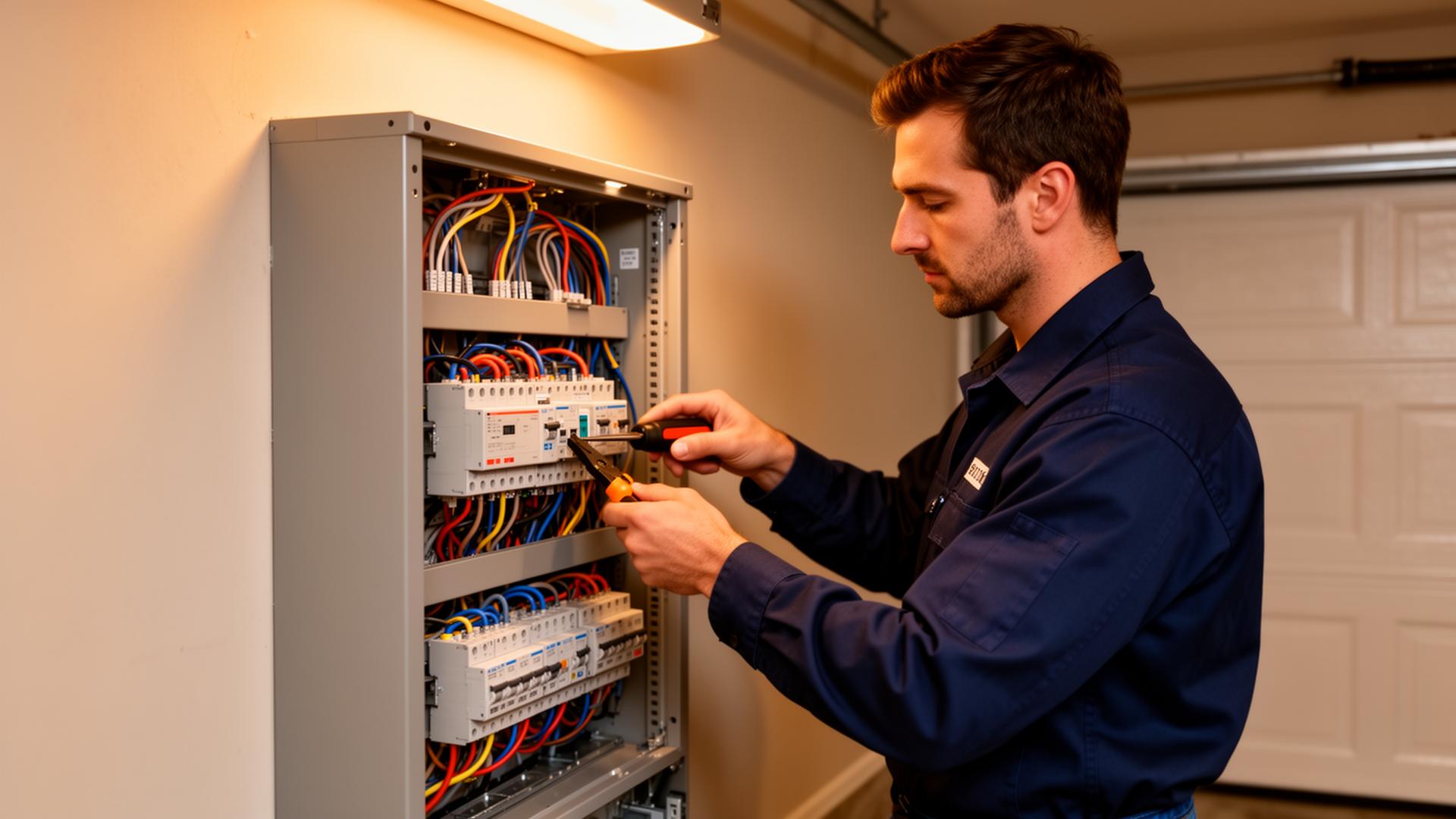
If the honest load list shows a heater plus a laser printer plus shop tools, plan two circuits from the start rather than adding the second after a winter of trips. Lights on the same circuit as heavy tools will flicker at every startup; separating lighting from receptacle loads is a small planning choice with a daily payoff. A service such as Cherry Electric Co. can load-check the existing panel first, confirm it has capacity for the addition, and tell you plainly if a panel upgrade needs to come before the new circuit.
Common questions
Can I just replace the breaker with a bigger one for my office?
No. The breaker protects the wire in the wall, which is sized to the original circuit. A larger breaker lets that wire overheat before tripping. More capacity requires a new circuit with correctly sized wire.
How disruptive is adding a circuit?
It depends on the route. With attic or crawl access, most work happens out of sight with small wall openings at the new outlets. Finished walls without access need more patching, which your electrician should flag before starting.
Does a home office really need a dedicated circuit?
Only if the loads justify it. Computers alone rarely do. Add a space heater, laser printer, or mini fridge to a shared circuit and trips usually follow, at which point a dedicated circuit is the durable fix rather than daily load juggling.
Photos in this guide are representative stock images.
← All guides from Cherry Electric Co.← Back to Cherry Electric Co.